
Drone-based agricultural spraying is becoming a practical service option for farmers, Farmer Producer Organisations (FPOs), agri-businesses and other farm operators in India. Instead of asking a farm team to purchase and operate a drone, a service model allows the field work to be planned and carried out by a professional drone operator.
The important question is not simply whether a drone can fly over a crop. The right application depends on the crop, target, formulation, field conditions, weather, operating plan and applicable aviation and agricultural requirements. This guide explains how to evaluate an agriculture drone spraying service in India, what can affect the cost per acre, and what information to provide when requesting a quotation.
Important: Drone spraying should be carried out according to applicable aviation requirements and the agricultural pesticide/nutrient application SOPs. The Government of India has issued SOPs for drone application, and the agriculture SOP specifies requirements relating to the drone, approved pesticides, application conditions and pilot training. Always verify the current requirements and product label before an operation.
What Is an Agriculture Drone Spraying Service?
An agriculture drone spraying service is a field application service in which a suitably equipped agricultural drone carries a liquid payload and applies an approved agricultural input over a defined area. Depending on the application, the payload may relate to crop protection or crop nutrition.
For a farmer, the service model can be simpler than owning the equipment. The service provider can coordinate the drone, trained pilot, field planning, spraying equipment and operational checks, while the farmer supplies the information needed to plan the job and follows the applicable agronomic instructions for the input being applied.
Government agricultural guidance recognises drone use for pesticide and nutrient application and provides SOPs for safe and effective operations. The SOP framework also addresses factors such as flight permissions, operating zones, weather, safety, emergency procedures and pilot certification. The Ministry of Agriculture's crop-specific SOP information is a useful reference when planning an operation.
Why Farmers Consider Drone Spraying
The value of drone spraying is not just about replacing one spraying method with another. For suitable fields, it can provide a controlled aerial application approach where access, labour availability, crop height or field conditions make conventional operations difficult.
These benefits should be treated as operational considerations rather than guarantees. Actual performance depends on the drone, spray system, field geometry, crop canopy, weather, formulation and the quality of the mission planning.
Drone Spraying Cost Per Acre in India: What Determines the Price?
There is no single reliable nationwide price that applies to every agriculture drone spraying job. A professional quotation should be based on the actual field and application requirements rather than an arbitrary per-acre figure.
When comparing drone spraying cost per acre in India, ask the service provider what is included in the quoted rate. The following factors commonly affect the total service cost:
| Cost factor | Why it matters |
|---|---|
| Area and field layout | Larger, consolidated fields may be easier to plan than several small or separated plots. |
| Crop and growth stage | Canopy height, density and the intended target can affect the flight and spray plan. |
| Input and formulation | The product, dilution, compatibility and approved application method must be checked before spraying. |
| Travel and mobilisation | Distance to the field, access and the number of plots can affect the service provider's mobilisation time. |
| Field conditions | Obstacles, trees, power lines, buildings, terrain and irregular boundaries can change mission planning requirements. |
| Number of applications | A seasonal requirement involving multiple visits should be quoted as a service plan rather than assumed to be one visit. |
When comparing agriculture drone spraying services, consider more than the quoted price. Check what is included in the service, such as drone operation, trained pilot, field preparation, spraying, travel and other agreed charges. If you are providing the agricultural input, discuss the required product, mixing instructions and application details with the service provider before the spraying begins.
Which Crops Are Suitable for Drone Spraying?
Crop suitability should be assessed for the specific application rather than by using a universal list of crops. The Government of India's drone application SOP discusses crop application parameters and notes that spray performance depends on factors including the crop, flight height, spray swath, flow control and environmental conditions.
Field crops with sufficiently accessible and uniformly distributed crop canopies can be candidates for drone application when the particular agricultural input and application method are appropriate. The SOP's technical guidance, for example, discusses maintaining the required height above uniformly distributed crops such as paddy and sugarcane.
Before booking, the service provider should understand:
- the crop and variety, where relevant;
- the crop growth stage and canopy condition;
- the pest, disease, weed or nutrition objective;
- the agricultural input and its label directions;
- the field size and number of plots;
- obstacles such as trees, towers, buildings and power lines; and
- the expected weather conditions during the application window.
A good service provider should be willing to say when a field or application is not suitable rather than treating every crop as an identical spraying job.
What Pesticides Can Be Used With Agricultural Drones?
This is an important safety and compliance point. The agriculture drone SOP states that only pesticides/insecticides approved by the Central Insecticides Board & Registration Committee (CIB&RC) should be used, with the dose remaining within the approved range. The formulation's compatibility with the drone spray system and the required dilution also need to be established before the mission.
In other words, a farmer should not assume that any pesticide that works with a conventional sprayer can automatically be put into a drone tank at the same concentration. The agricultural product label, approved use, application method, dilution, nozzle system and operating conditions all matter.
Best practice: Give the service provider the exact product name, formulation and label/application instructions before the visit. Do not ask the operator to improvise a chemical mixture or dosage on site.
Weather and Field Conditions Matter
Drone spraying is not simply a matter of arriving at the farm and starting the motors. Weather can influence spray deposition and drift, while the field itself determines how safely the aircraft can be operated.
The Government SOP identifies environmental limitations involving conditions such as wind speed, temperature and relative humidity. A responsible operator should therefore check the conditions before and during the operation and postpone the application when conditions are unsuitable.
Field safety also matters. The operator should identify obstacles, establish the mission area and maintain appropriate safety margins. The technical SOP highlights the importance of altitude sensing, GPS/map accuracy, geo-fencing or safety margins and fail-safe functions such as Return to Home.
Who Should Operate the Agriculture Drone?
Agricultural spraying should be handled by an appropriately trained and authorised drone operation team. The agriculture SOP states that only DGCA-certified pilots should be permitted to fly agricultural drones for the covered application.
India's drone regulatory framework is governed by the Drone Rules, 2021, with subsequent amendments. Regulatory services for drone stakeholders have also been migrated from the Digital Sky platform to the DGCA's eGCA portal in stages beginning in 2025. For a current operation, the provider should verify the applicable regulatory status and services through the current DGCA/eGCA system rather than relying on an old checklist.
How to Book an Agriculture Drone Spraying Service in India
If you are a farmer, FPO, cooperative, CHC or agri-business looking to arrange a pesticide spray drone service in India, prepare the following information before contacting a provider:
- Share your location: Give the village, district and state, plus the exact field location if available.
- Confirm the total area: Provide the acreage/hectares and mention whether the land is one plot or several separate plots.
- Identify the crop: Tell the operator the crop, growth stage and approximate canopy condition.
- Explain the objective: State whether the job is for pest, disease, weed or nutrient application.
- Share the product details: Provide the exact agricultural input and relevant label/application information.
- Share field constraints: Mention trees, high-tension lines, buildings, ponds, roads, livestock areas or other obstacles near the field.
- Agree on the service scope: Confirm what the quoted rate includes, the expected application window and any mobilisation/travel charges.
- Confirm weather readiness: The final flight should proceed only when operating conditions are suitable.
What to Ask Before Choosing a Drone Spraying Provider
- Is the drone suitable and compliant for the intended agricultural application?
- Who will operate the drone, and what pilot certification/training does the operator hold?
- What spray system, nozzle configuration and flow-control method will be used?
- How will the provider assess field boundaries and obstacles?
- How will weather conditions be checked before spraying?
- What pesticide/nutrient information does the provider need before the job?
- What exactly is included in the quoted price per acre?
- What happens if weather conditions make the planned application unsafe?
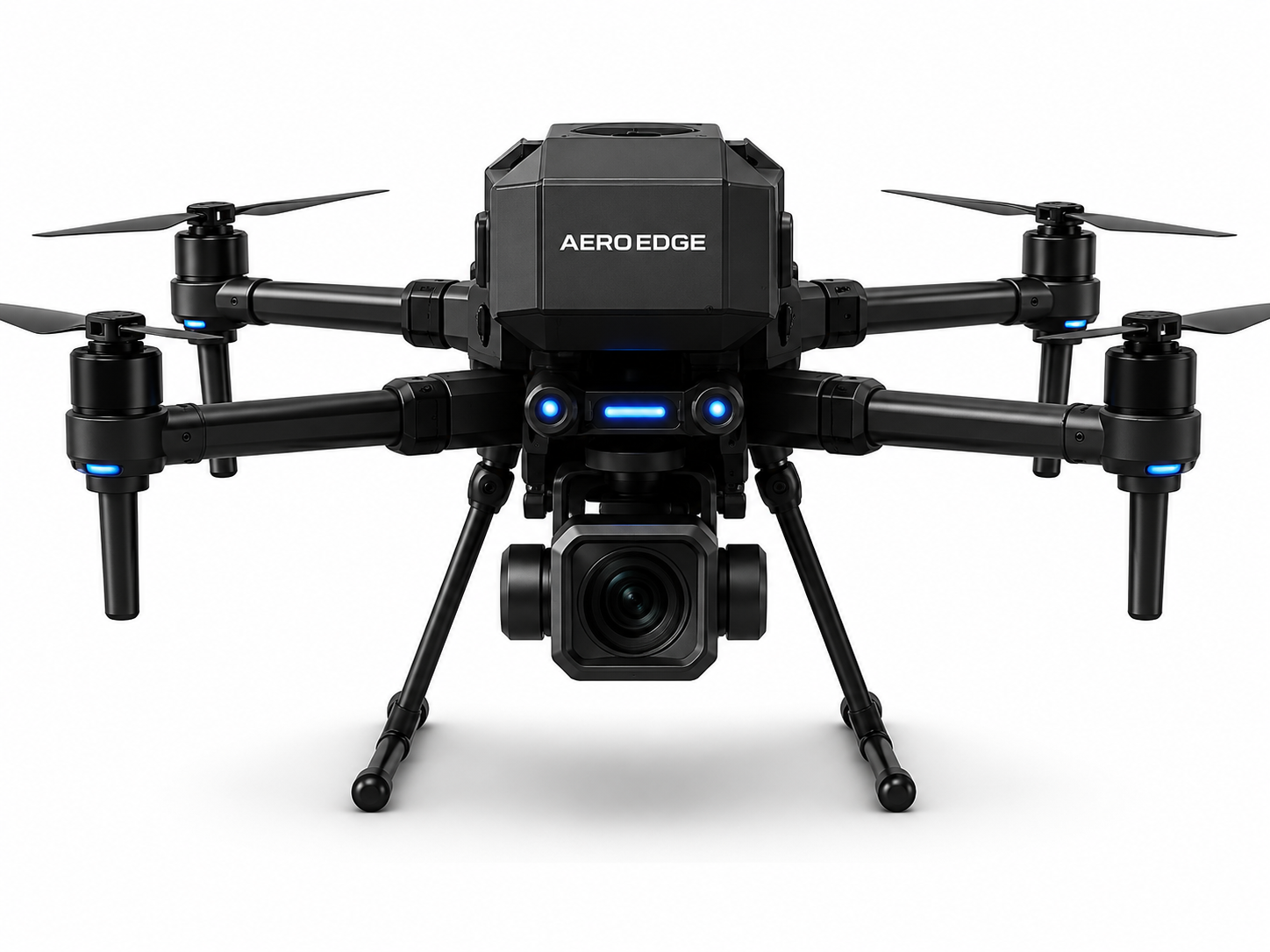
Meet the AERO Edge ADT Agri Pro Agriculture Drone
For organisations that want to understand the equipment behind professional agricultural drone operations, AERO Edge offers the ADT Agri Pro, a 16 L agriculture drone designed for precision agriculture applications. It is positioned for crop spraying and other drone-based agricultural use cases, including crop health monitoring, yield estimation and farm analytics.
ADT Agri Pro — Agriculture Drone in India
The ADT Agri Pro combines a 16 L tank with a stated flight time of 20 minutes, a 5–7 m spray width, terrain-following capability and IP67 water resistance. These specifications are relevant when evaluating an agriculture drone for precision spraying and related field operations.
Applications: Precision Spraying, Crop Health Monitoring, Yield Estimation and Farm Analytics.
Explore ADT Agri ProIf you are comparing drone spraying service for farmers with purchasing equipment, the ADT Agri Pro page provides the product specifications and application information you can review before discussing your operational requirement with AERO Edge.
Drone Spraying Service vs Buying an Agricultural Drone
For a farmer who needs spraying only periodically, a service model can be easier to evaluate than purchasing an aircraft, spray system, batteries, charging equipment and other operational equipment. The farmer pays for the required field operation rather than taking responsibility for the complete drone ownership and operating cycle.
Buying may make more sense for an organisation that has a recurring, large-scale requirement and is prepared to manage trained operators, equipment maintenance, regulatory requirements, field planning and operational safety. FPOs, Custom Hiring Centres and other organised agricultural groups may evaluate the economics differently from an individual farmer.
The right choice therefore depends on utilisation, geography, operational capability and the number of acres that need to be treated over a season—not simply the purchase price of a drone.
Why Professional Mission Planning Matters
Agricultural spraying is a precision task. A drone should not be treated like a flying bucket that simply releases liquid over a field. Mission planning needs to account for field boundaries, obstacles, altitude, speed, spray swath, flow rate, battery capacity, payload and safe operating margins.
The Government's technical SOP also highlights requirements such as accurate altitude sensing, GPS/map accuracy, continuous spray swath where appropriate, variable flow control, leak prevention and fail-safe functions. These details are part of what separates a properly planned drone spraying operation from an improvised flight.
Frequently Asked Questions
How much does drone spraying cost per acre in India?
There is no single rate that applies to every field. The quotation can vary with area, crop, field layout, travel, number of plots, application requirements and operating conditions. Ask for a field-specific quote rather than relying on a generic online rate.
Can drones spray pesticides on all crops?
No. Suitability depends on the crop, crop stage, target, approved agricultural input, field conditions, spray system and weather. The application should be assessed for the specific crop and treatment.
Can I give any pesticide to the drone operator?
No. The applicable agricultural SOP requires approved pesticides/insecticides and adherence to approved doses and compatibility requirements. Provide the exact product and label information to the service provider before the operation.
Do I need to buy a drone to get spraying done?
No. A service model allows farmers and organisations to book a professional operator for the required field work instead of purchasing and managing the entire drone setup themselves.
What information should I provide when asking for a quote?
Share your location, total area, number of plots, crop and growth stage, intended treatment, agricultural input details, field obstacles and preferred application window. This gives the provider enough information to assess the job properly.
What if the weather is windy on the scheduled spraying day?
The operation should be assessed against the applicable operating and agricultural conditions. If conditions are unsuitable, a responsible provider should postpone or reschedule the application rather than compromise safety or spray performance.
Need an agriculture drone spraying service?
Share your field location, acreage, crop and application requirement with AERO Edge so the team can understand the job and discuss the appropriate service scope.